

A Day in the Life of a YCC Student at the Children's House
Every day, life-changing work occurs in a YCC classroom. Not the work that sits on the shelf, but the work that happens inside of each child as they self-construct. The children are learning what it means to be a member of a community, how to take care of themselves, and how to adjust when things are challenging.
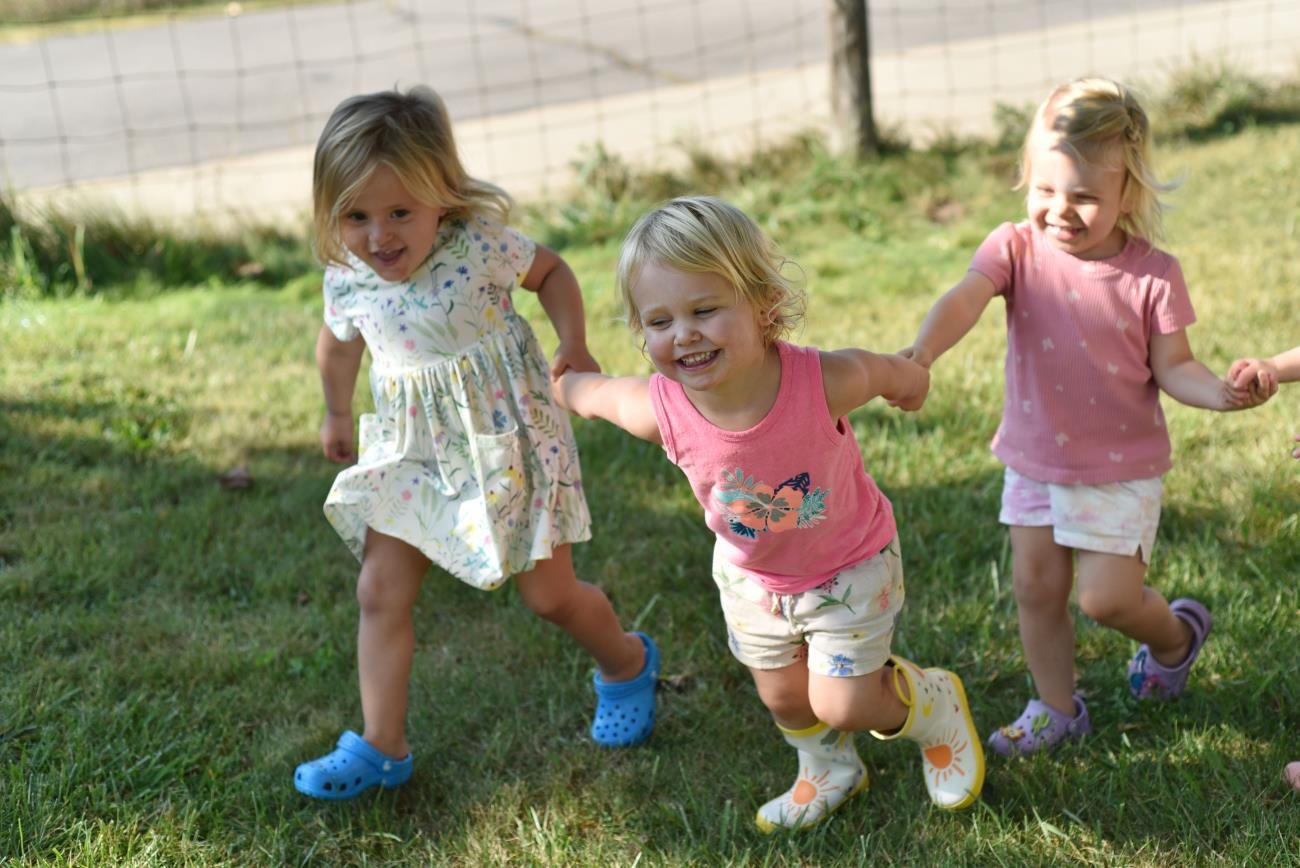
Embracing the Seasons with your Toddler
Toddlers are my favorite people for many reasons, but one quality of The Young Child that I absolutely treasure is their ability to be completely present.
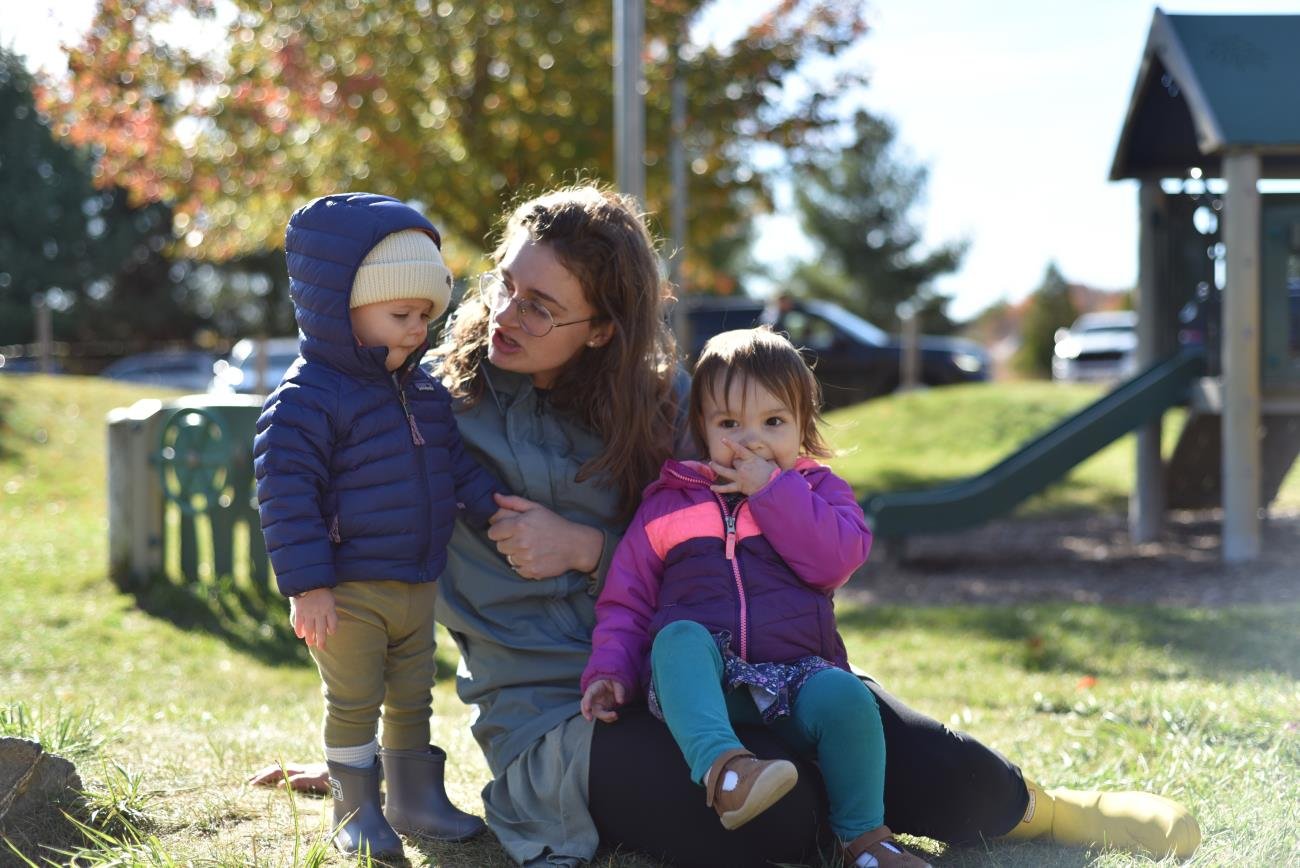
Slowing Down with Toddlers
Toddlers are curious, willing, and loving. They are strong-willed, know what they want, and are very driven to achieve it. They test and push the boundaries. They give the best hugs. They are painfully honest, have big feelings, and have many opinions about life. They are my favorite people!
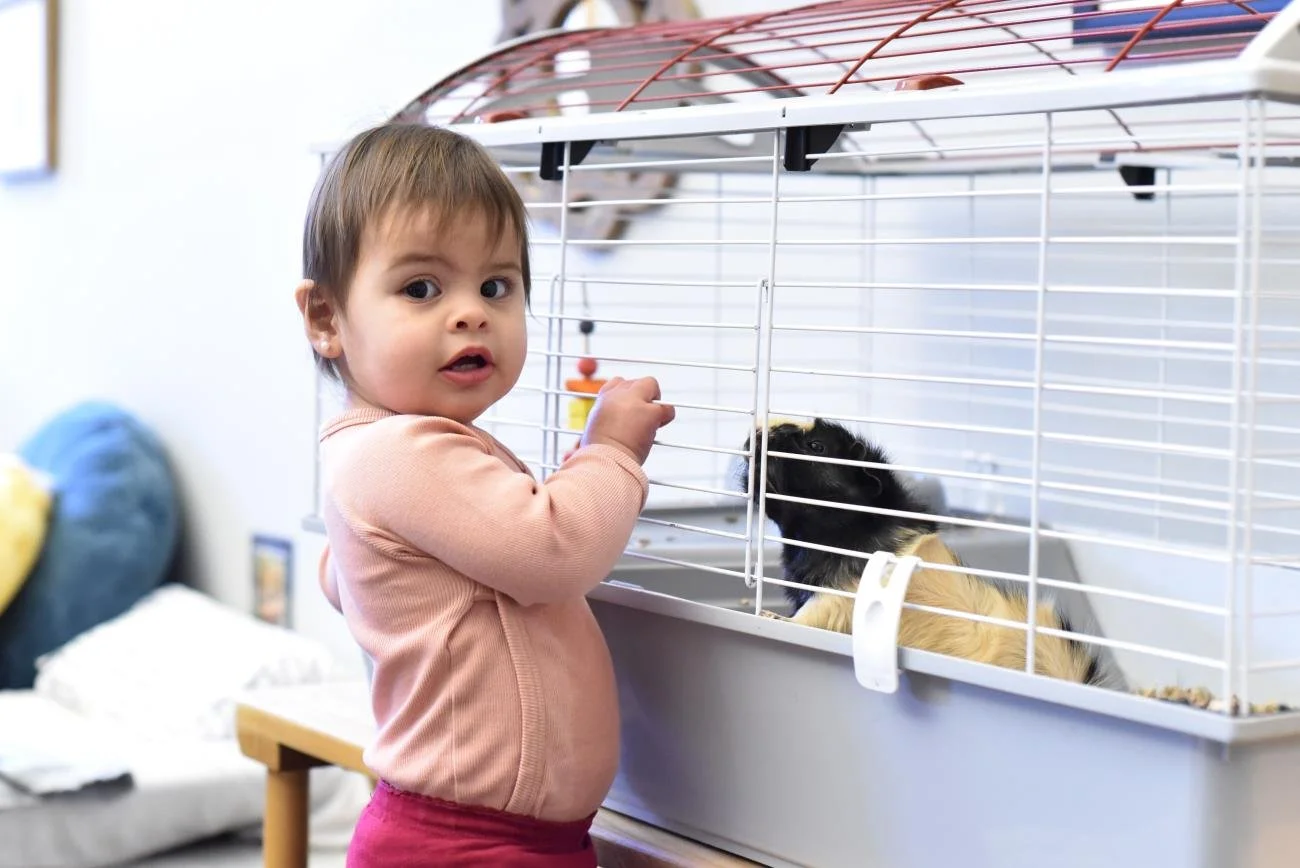
The Role of Classroom Pets in the Montessori Classroom
The Montessori philosophy uses classroom pets to connect students to the natural world and creates interconnections with all living things. The philosophy involves teaching empathy, compassion, practical life skills, observation, and curiosity. There are many ways in which a pet in the classroom fosters these teachings.
Practical Life at Home
If you look to social media for ideas about Montessori for very young children, you will likely see lots of stuff. There are several materials in our classrooms that would be excellent in a home as well, but I would argue the best way to do Montessori at home is to include your child in as many aspects of daily life as you can.
I've Got The Power
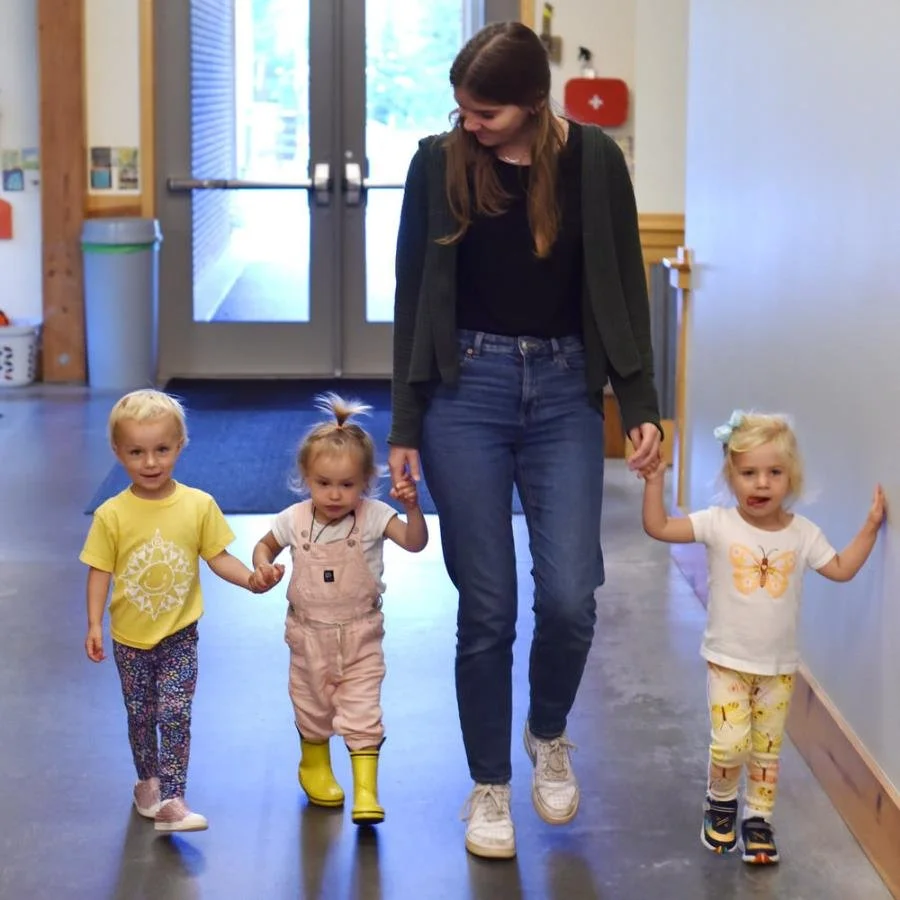
Power struggles between children and caregivers are a common part of a toddler’s development. Early on they develop a strong sense of order, which helps them make sense of their world. They observe how things are to be done and this becomes their perceived reality. However, this reality does not always align with the adult's reality and often a power struggle ensues.
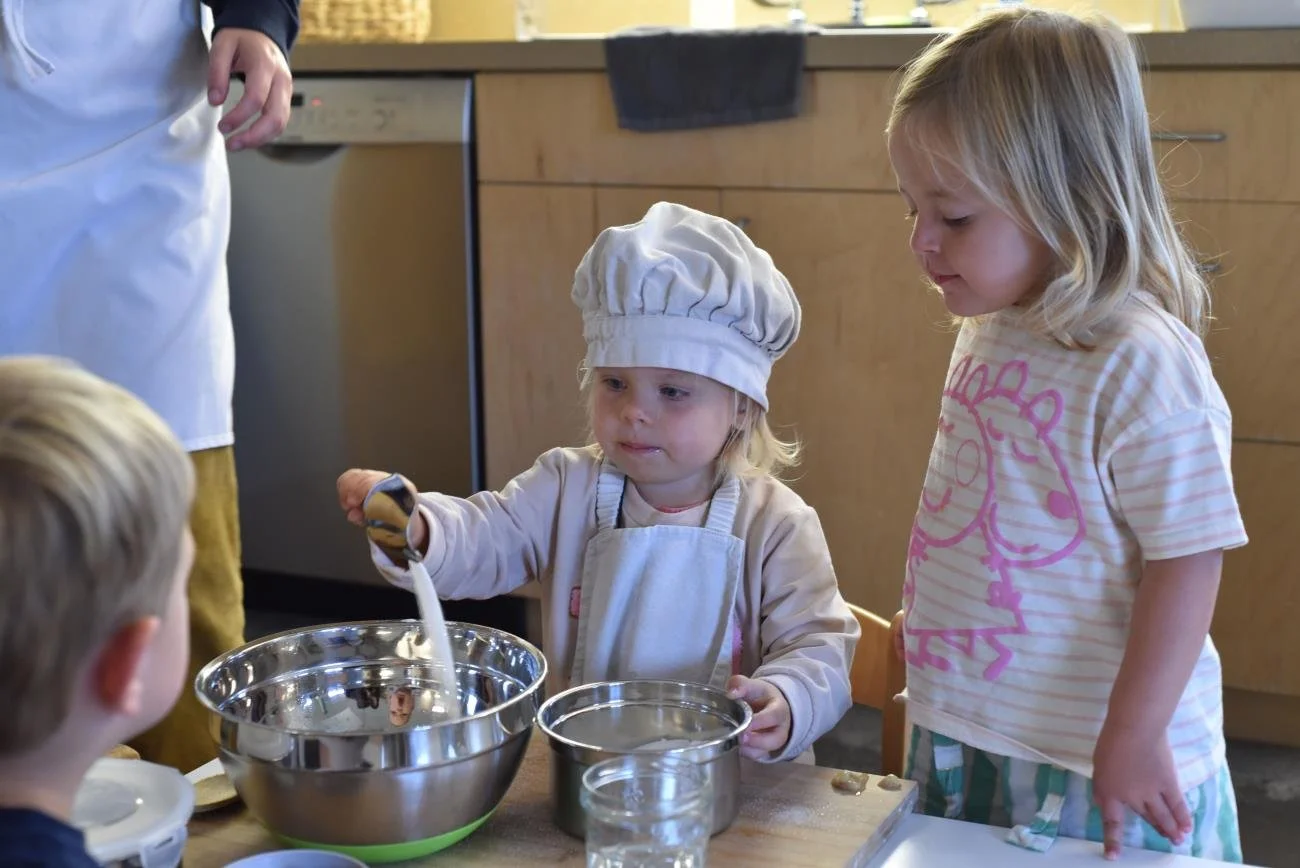
Cooking with Young Children and Tools of the Trade
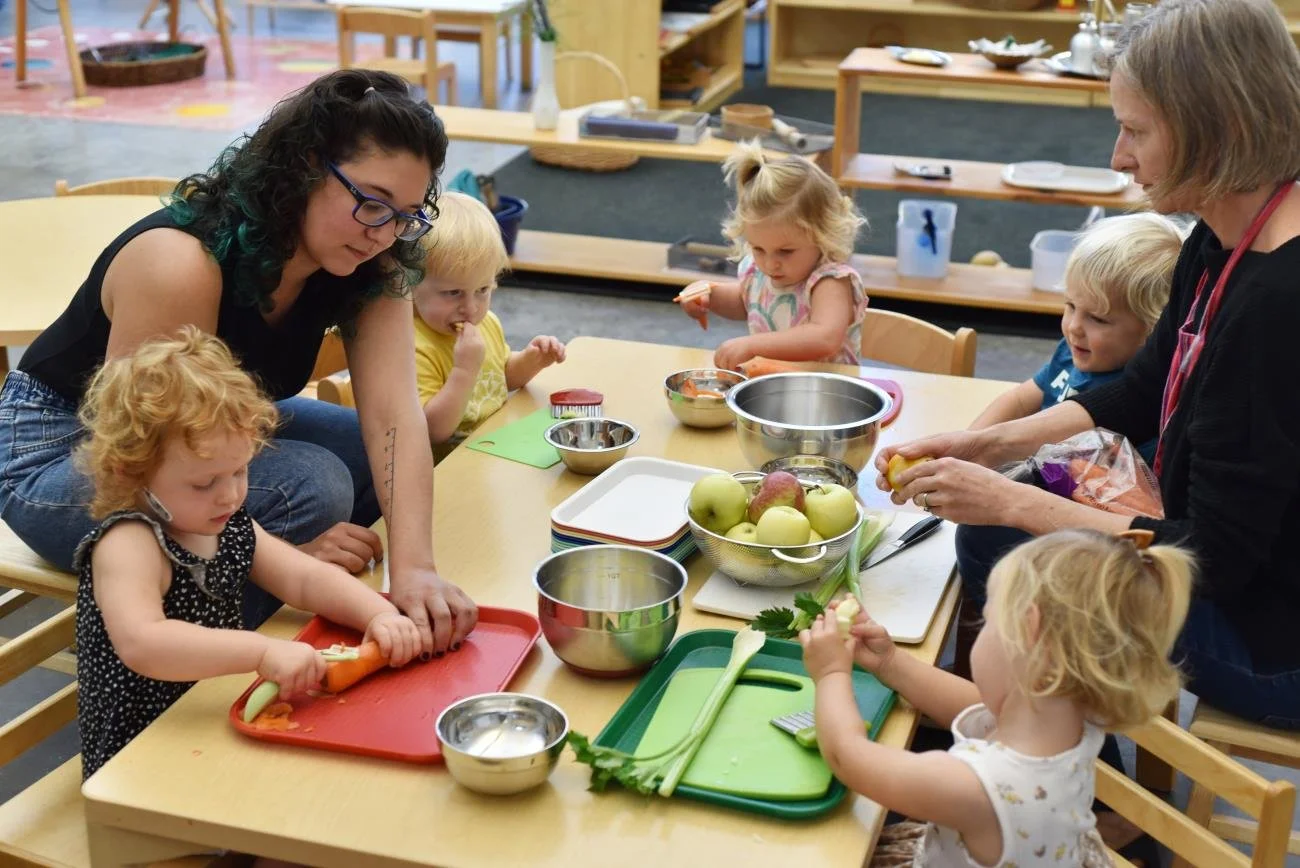
Preparing food with children is my favorite activity in the classroom. Seeing their enthusiasm about making food, tasting it, and eating the finished product is very rewarding.
Why is teaching children about preparing food so important?
Incorporating Holidays into the Classroom
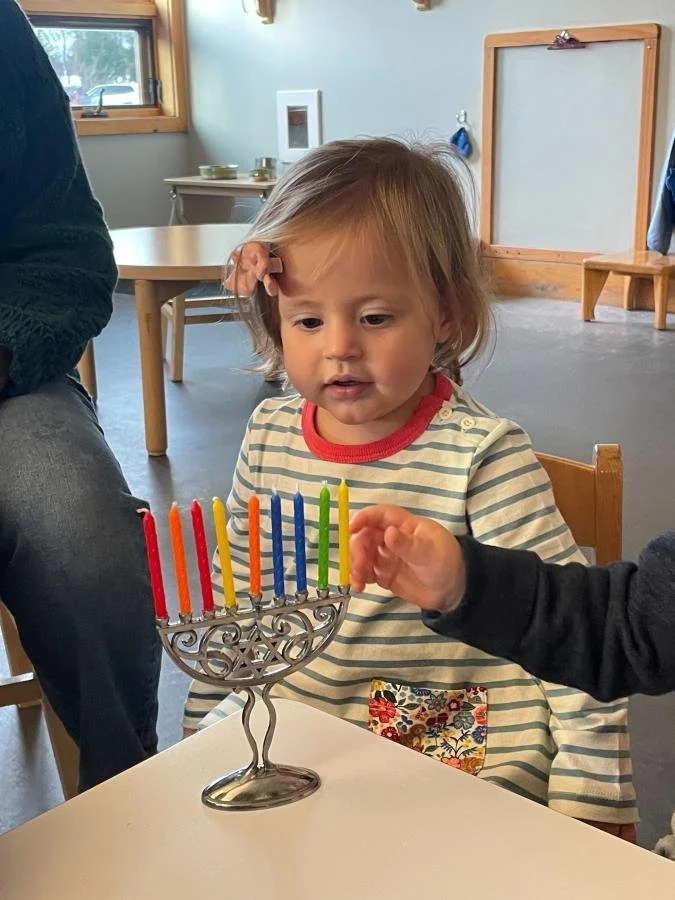
In September of 2020, the staff of The Children’s House was privileged to virtually host Britt Hawthorne for an Introduction to Anti-Bias Education. Every time we have an adult learning opportunity as a staff, I try to make an intentional change to the way that I think about things in my classroom and my worldview in general.
The Evolution of Guiding
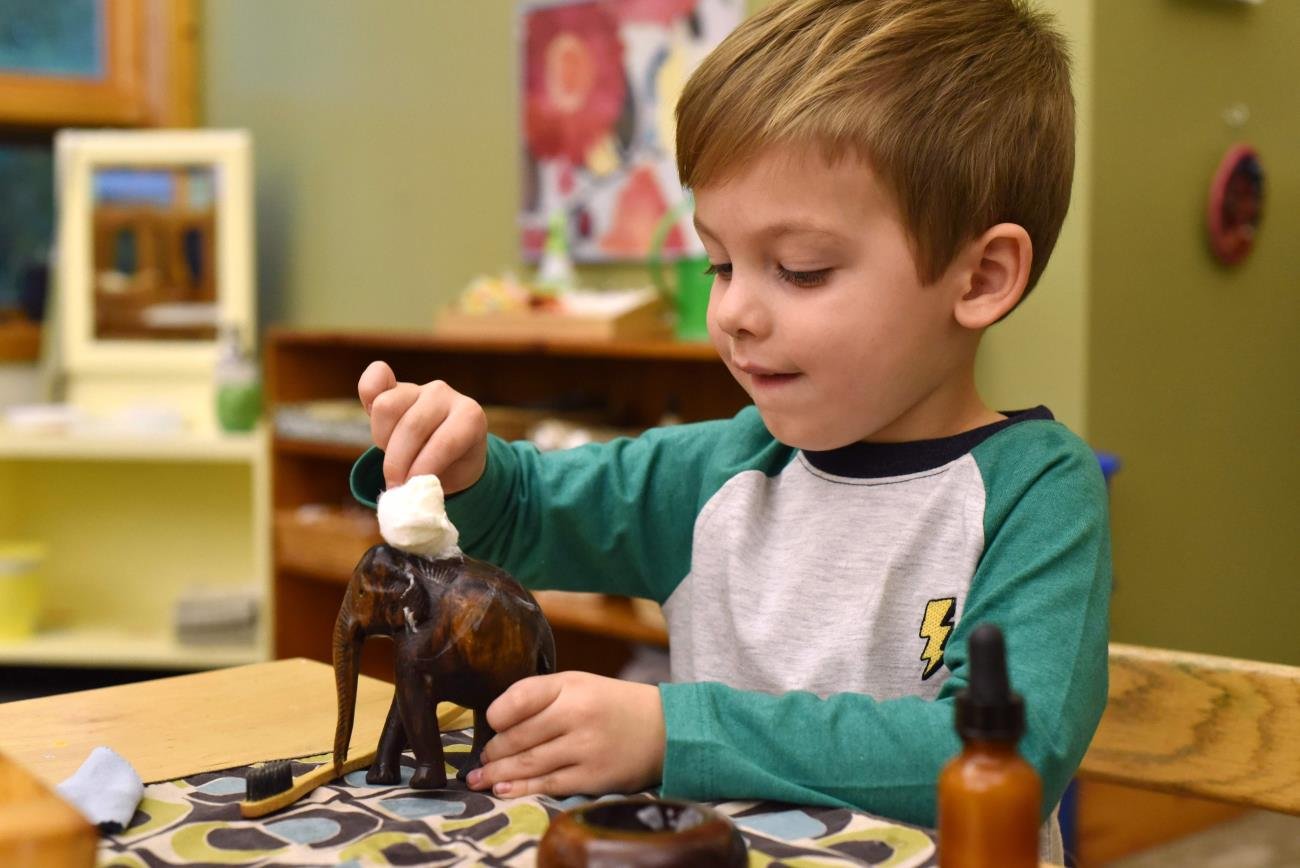
Being an educator for the past 27 years at The Children's House has taught me a lot about children, parents, and the influence of our changing world on education. First, I want to reflect on the positive changes I have witnessed. Parents are much more involved in their child's education. They are taking more of a stand in what they want for their child educationally.
Teens; a Reprise of the Toddler Years
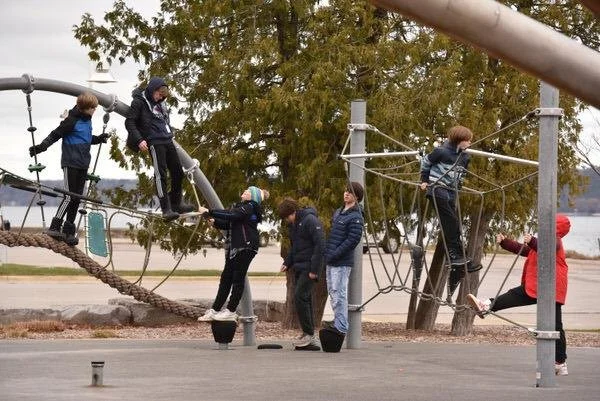
Toddlers and Teens exhibit similar behaviors externally because they are coping with similar conditions internally. Both ages are experiencing intense growth, physically, emotionally, and intellectually. Their minds and bodies are exhausted. Even though both require more sleep to combat the increase in energy expenditure, getting sleep during regular sleep hours can often be a struggle.
Believing in the Child
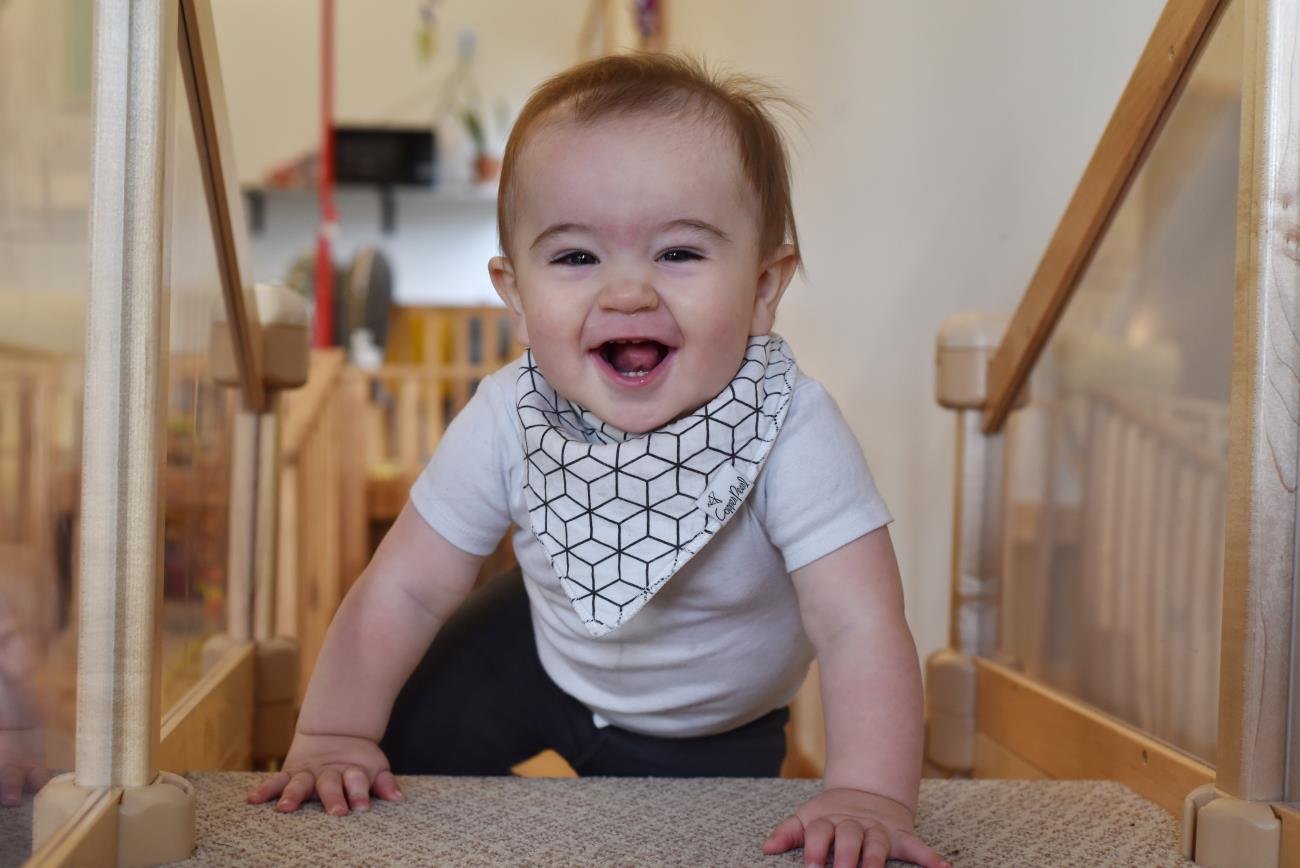
The role of the adult is not to pave a pathway for the child, but to make sure that the child has what they need to forge their own way. The greatest way for us to support children is to treat them with constant love, trust, and respect. It is so important that each child feels loved just as they are.
Food Feelings, Choices, and Stigmas
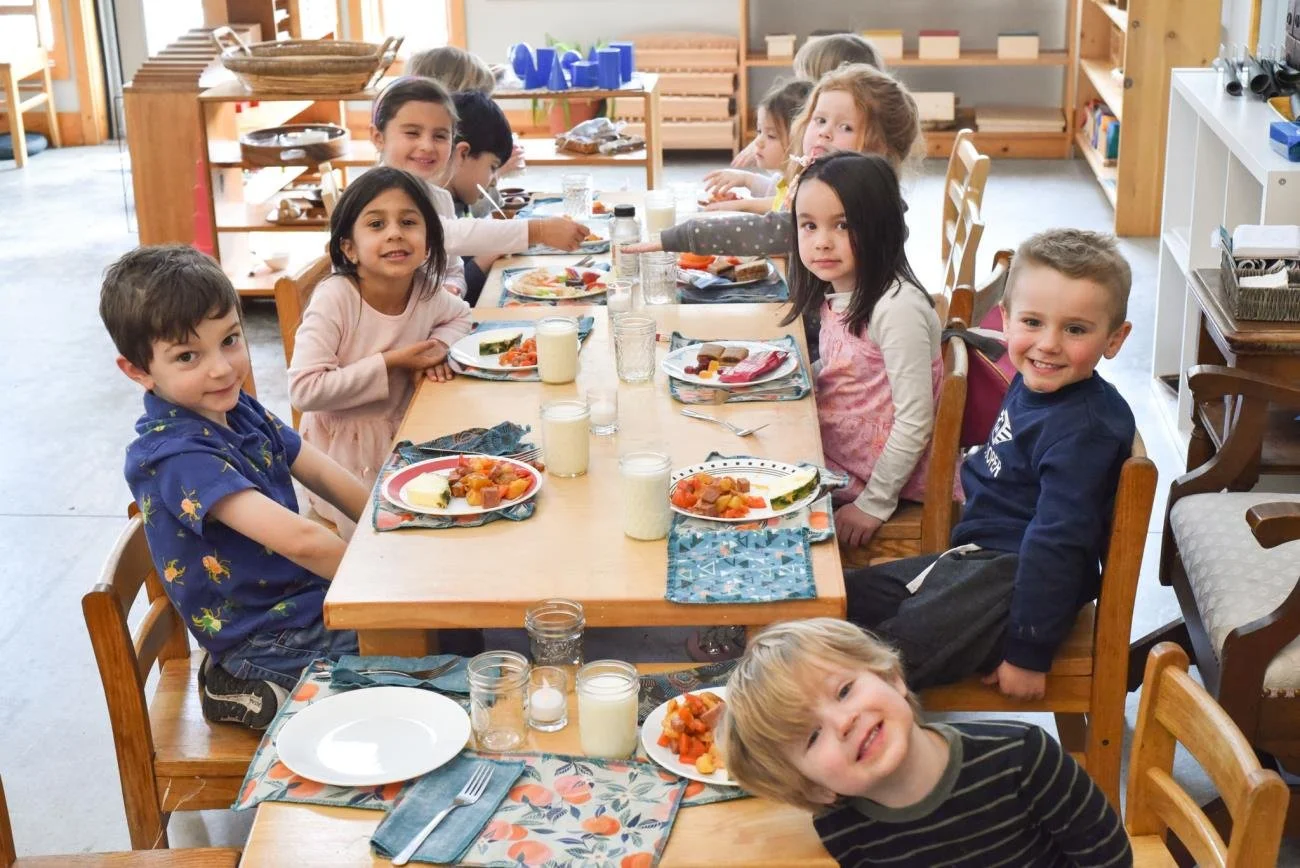
We had a lot of talk in the classroom about candy and treats upon our return from the Easter weekend. I thought this would be a great time to open a discussion about how we handle the variety of foods we make available to children. There is a shifting trend, particularly in the parenting arena, where we are asked to stop placing foods into a hierarchy.
A Path Toward Independence
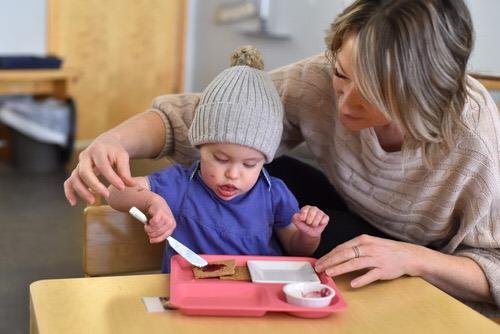
“Help me to do it myself” is a well-known Montessori expression referring to a core component of the philosophy, encouraging and nurturing independence.
Consistency of Expectations
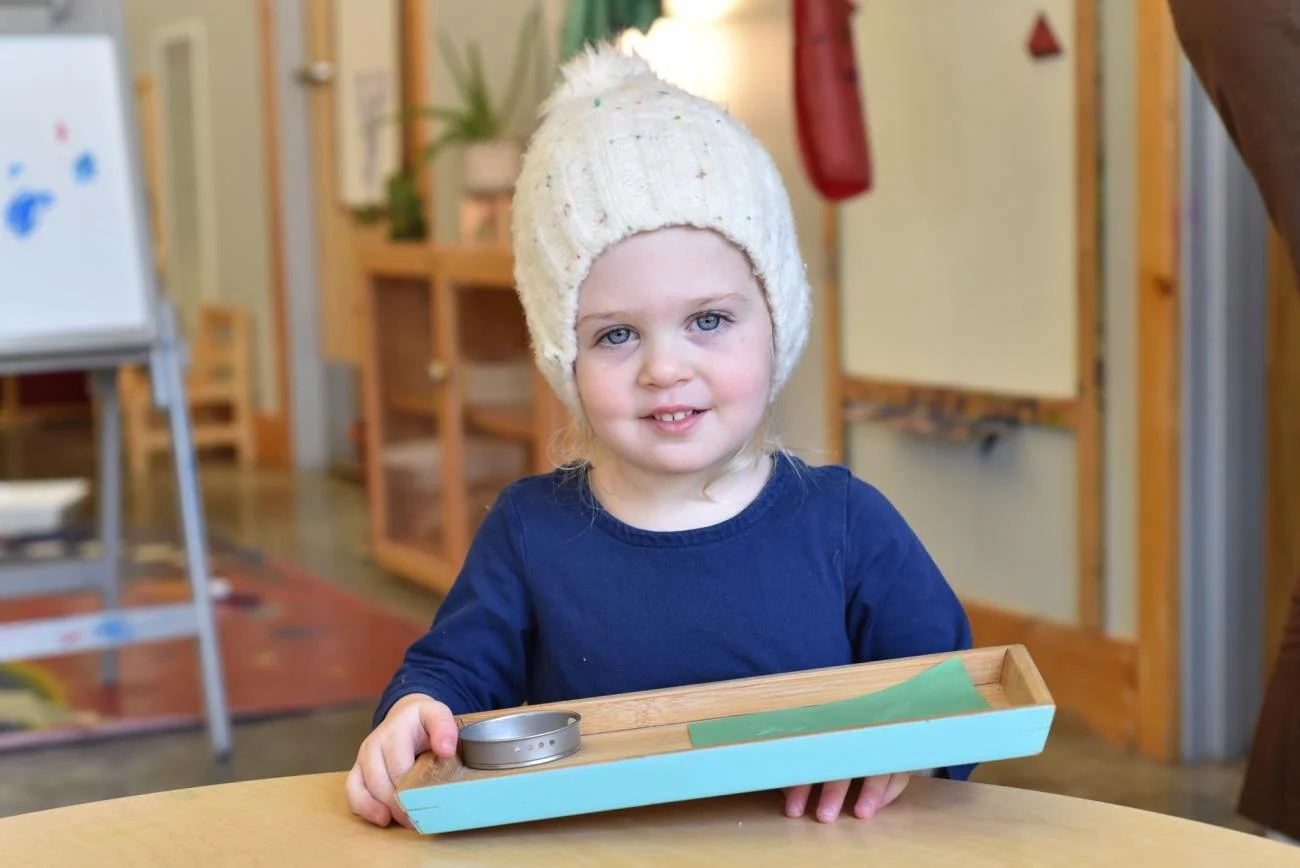
It sometimes feels uncomfortable for adults to set up limits and discipline the child. We all carry baggage from our childhood when it comes to memories of being disciplined. The word “discipline” brings negative feelings, and as a result we are sometimes reluctant to set limits to a child's actions, worrying that it may squish their personality. As a result we end up negotiating endlessly with a child who quickly learns that all limits are negotiable.
The Art of Observation
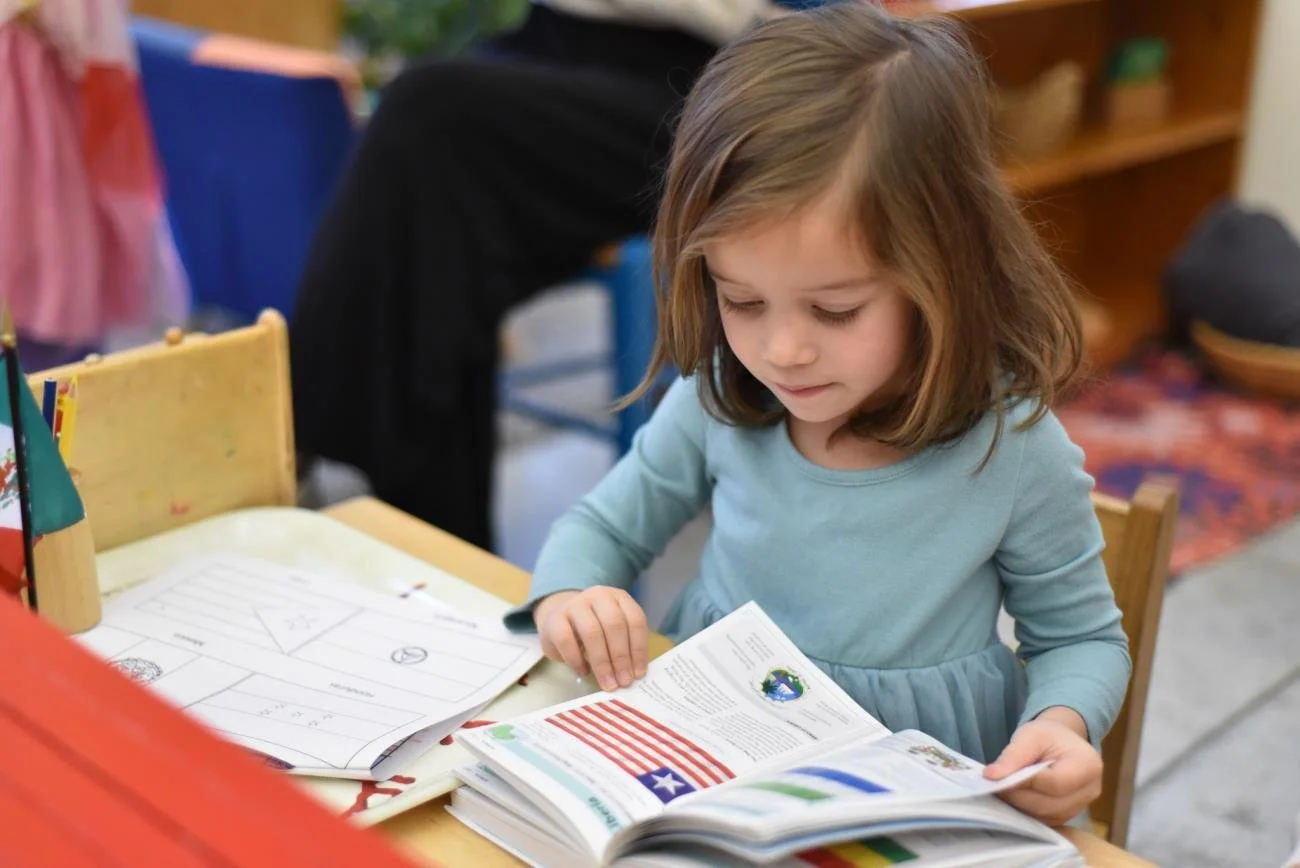
The Montessori Method would not exist without Dr. Montessori’s careful and scientific observation of children. Although the first Montessori environment was not designed for an educational experiment, the children revealed new characteristics of human development that were previously unknown. Dr. Montessori observed that children are far more capable than adults often assume, and they have inner needs that must be satisfied in order to continue developing in an optimal way.
Fanning the Flames of Intrinsic Motivation
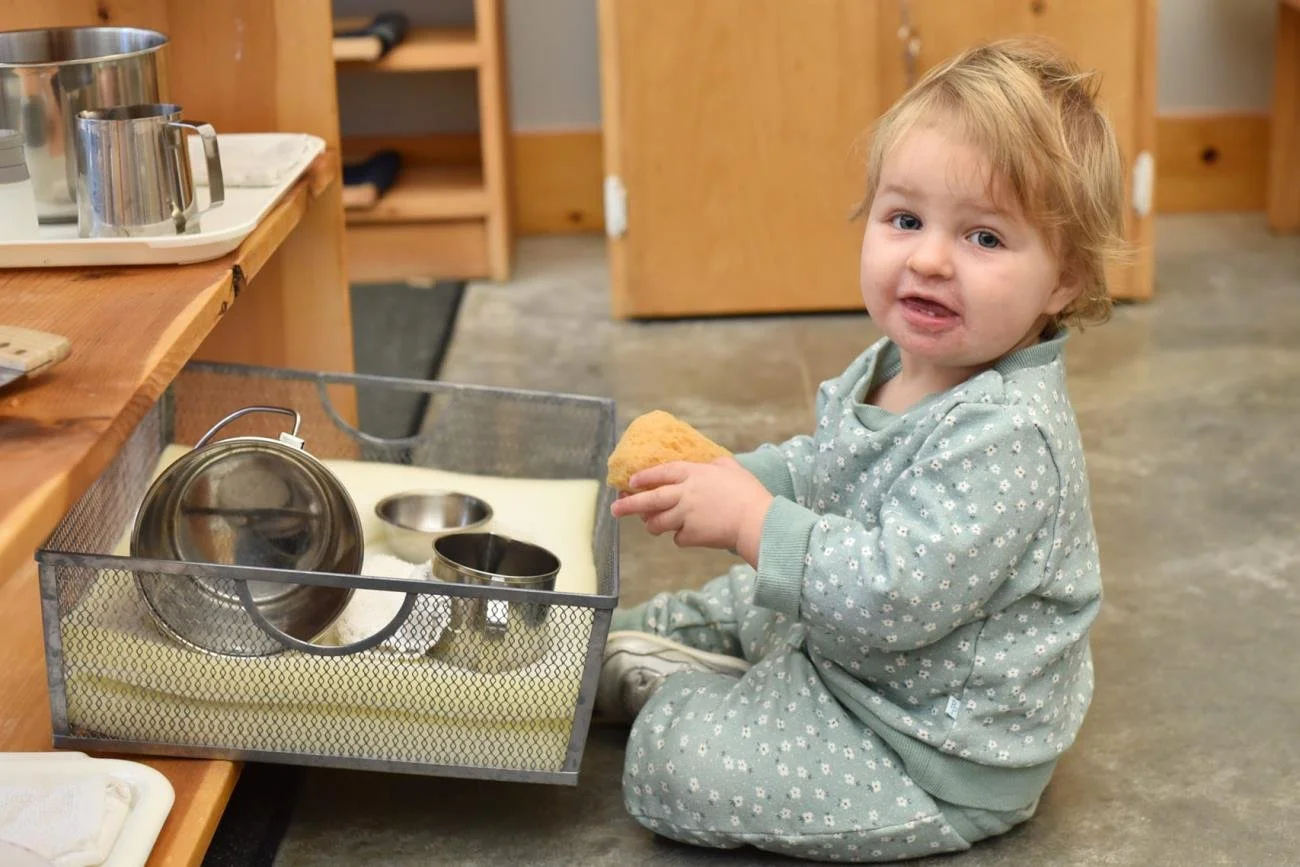
A few years ago I developed an interest in woodworking. I purchased some hand carving tools and an instruction book on how to use them. I watched a lot of YouTube videos on the subject and joined a few woodworking groups on social media. Eventually, I was able to carve a very rugged cooking spoon. Not yet satisfied, I took a class on how to use machinery for woodworking. In doing so, I built a very rudimentary step stool.
The Sensitive Periods
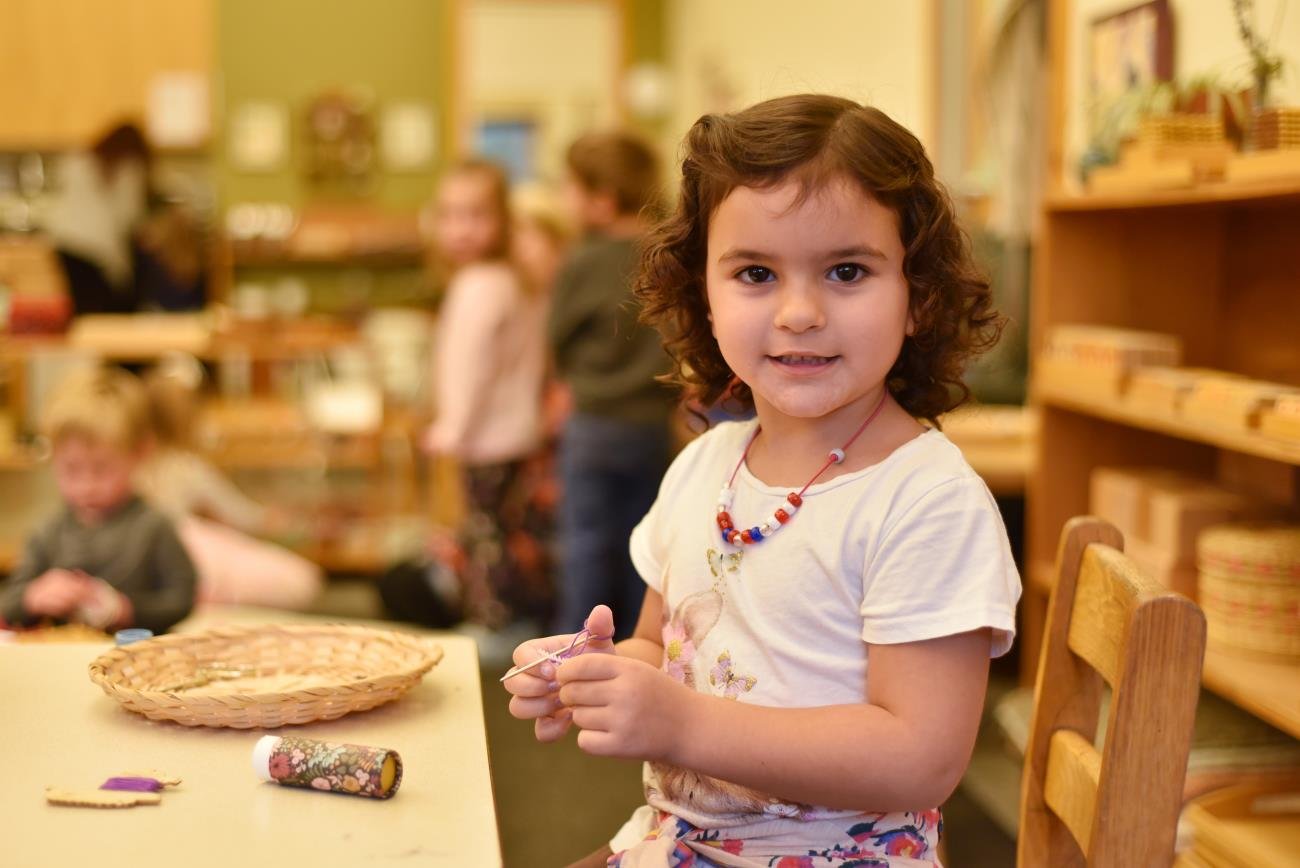
Dr. Maria Montessori observed that children develop at their own pace and according to a series of highly predictable transitory sensitive periods. At each period they are susceptible to aspects of their own environment and acquire distinct characteristics.
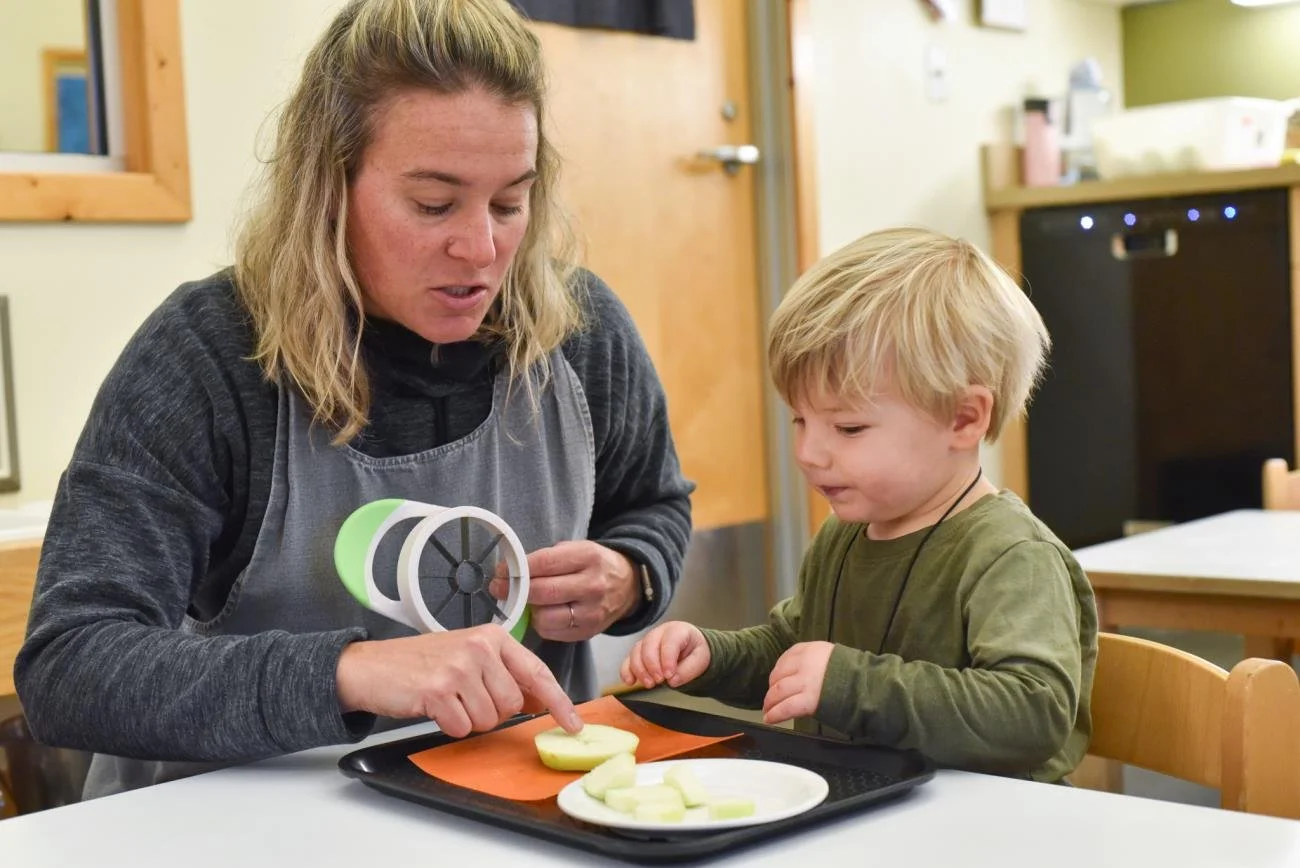
Partnering with Families to Raise Exceptional Learners
hink back to when you first considered enrolling your child at The Children’s House. No matter the reason you chose to be here - and surely, there are a million - you have selected an environment that is not just a beautiful place for your child to spend their days; you have also joined a loving, supportive school community. As I welcome new families into the Young Children’s Community, I share with them that the community within our four walls will become your child’s new home away from home.
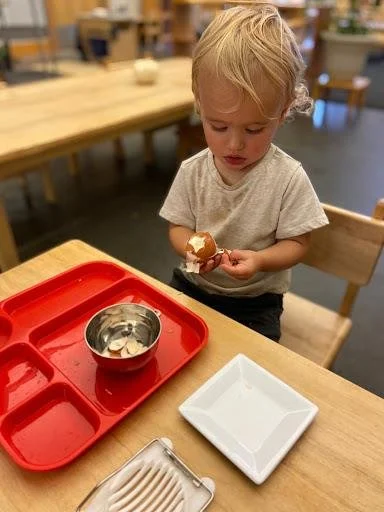
Young Children in the Kitchen
Every aspect of the curriculum of the Young Children’s Community culminates within Food Preparation. There are big movements like carrying bowls to and from tables and dish carts. There are small movements like peeling the rind off of a clementine or holding a knife to spread jam on a slice of toast. There is so much language around smells and tastes as well as all the verbs that go along with preparing food.
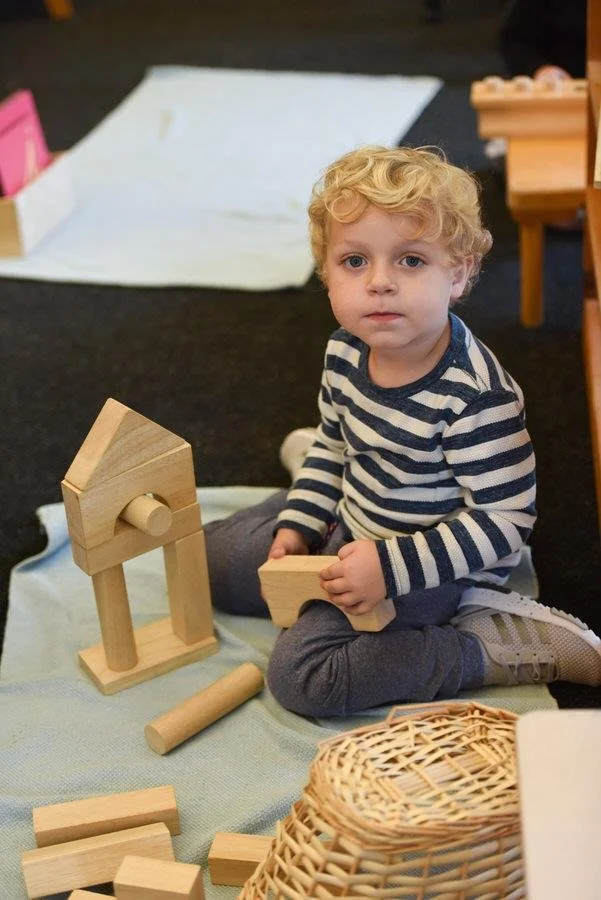
The Language of Encouragement
We often hear the terms “praise” and “encouragement” in a wide variety of school settings. Praise is typically defined as expressing approval or admiration whereas encouragement is a more supportive action that points out facts without tying them to an evaluation of one’s work. In a Montessori classroom setting, we provide encouragement by noticing. This may be as simple as “You spent the whole morning on your cursive handwriting,” or something more complex such as, “It felt helpful when you cared for our community by setting the lunch table.”