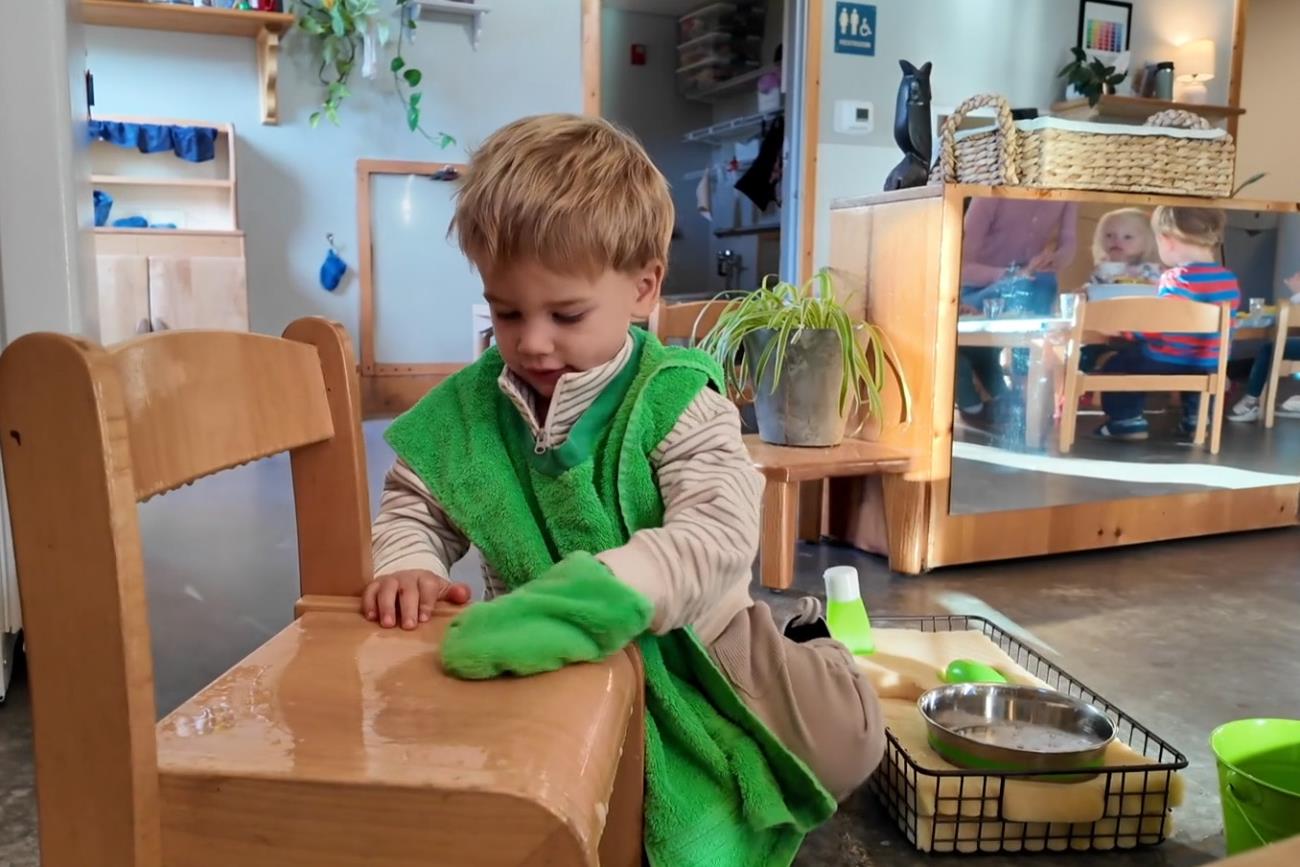
Every day, life-changing work occurs in a YCC classroom. Not the work that sits on the shelf, but the work that happens inside of each child as they self-construct. The children are learning what it means to be a member of a community, how to take care of themselves, and how to adjust when things are challenging. In our room, we give the children ample space to try things independently while providing a structured environment and schedule for them to exist within. The consistency of our day provides a feeling of safety and security, which the children thrive off of. When they are understood and cared for, toddlers are free to explore the world around them. Follow along as these sweet little people experience all of life’s beauty during a single day at TCH!
When the children arrive at school, they hang their toddler-sized backpacks and jackets in their cubbies and then enter the classroom. It is important that they are each greeted with great care. These first few moments set the tone for the day, and every child should feel seen.
For the first two hours of the day, the children are able to choose work freely as they navigate throughout the classroom. “Work” is a broad term at our level, for even sitting at the snack table or using the bathroom provides opportunity for independence and growth. The children develop their fine-motor skills by putting a stem into a vase, by honing the use of scissors, and by tonging food onto their plate. They are constantly learning, not always through explicit lessons, but by taking in what is around them.
Gross motor activities are also included in the first part of our day. We frequently take walks to the garden or around the school. Restocking our art and baking supplies is an easy way to move our bodies while connecting with the greater TCH community. For those who need some time to run fast and hard, the gym is available in the morning.
During the morning work cycle, the children take care of our environment by watering plants, sweeping the patio, and mopping the floor. They care for each other by preparing snack and offering their help when it’s needed. They care for themselves by changing their clothes, washing their hands, and wiping their face with a napkin. Everything they choose to do falls under one of these categories (care of environment, care of others, care of self), and each task is massively important to the creation of their identity.
At around 10:30 a.m., the children begin to filter out to the hall where they put on their outdoor clothing (some independently and some in collaboration with an adult), and head to the playground. We try to make transitions in waves so that they are less overwhelming and each child gets the time and support that they need.
Outside, the children play in the sand, bike around the track, and collect things in wagons or wheelbarrows. Some decide they are chilly and opt to put on another layer. Some shed their layers. Again, these are learning opportunities. Sometimes we need to be a little cold to know that a jacket is what we want. Within reason, we let the children decide these things for themselves.
After an hour or so outside, the children come inside (a few at a time), hang their things, and prepare themselves for lunch. Unlike morning snack, which is set at one table and happens throughout the work cycle, lunch is family-style. We sit at one large table to share food and conversation. The adults model eating each part of the meal, as the children are much more likely to try things when they see us do it first. After lunch, each child clears their spot and cleans their face and hands if needed. Just as in the transitions before, a few children at a time make their way to the gym.
From the gym, the children return to the classroom and find their beds for a nap.
After rising, an afternoon snack is offered. We often eat the things we prepared that morning (bread, muffins, apple slices, chopped grapes, etc.), closing the loop on our school day. From snack, carline children venture out to the hallway where they gather their things and wait for their names to be called. When it is their time to go, they are walked out and reunited with their caregiver; a simple yet sacred moment shared between the different parts of the child’s life.
What a privilege it is to spend the day with toddlers. The world is so big and new and exciting. I can’t wait to do it all again tomorrow.
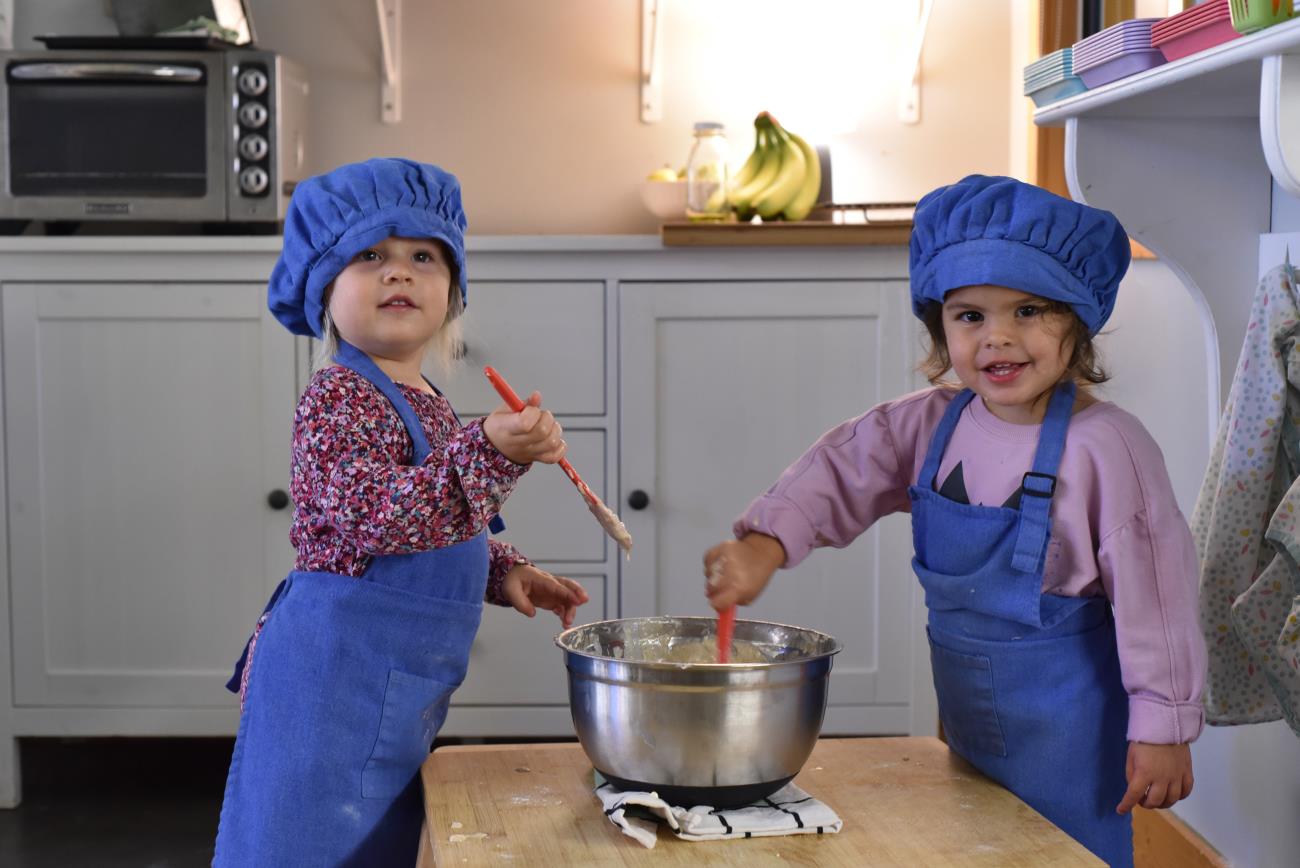
“A child who has become master of his acts through long and repeated exercises, and who has been encouraged by the pleasant and interesting activities in which he has been engaged, is a child filled with health and joy and remarkable for his calmness and discipline.”
.jpg "importance-of-routine-2-(2).jpg")
- Maria Montessori, The Discovery of the Child
The young child, who has just entered this vast external environment, is doing their best to make sense of the world around them. From birth to age six, the child possesses what Dr. Maria Montessori referred to as an “Absorbent Mind” that captures and integrates all of their lived experiences. The child forms impressions from the environment and incorporates those characteristics into their psyche. External order promotes internal order; thus, a sense of order contributes to one’s quality of life and can only be established after reference points have been made in the environment. Therefore, implementing consistent routines is of the utmost importance as the child seeks to create order within their life and within themselves.
Routines provide predictability and structure, signaling to the child that the world is stable, secure, and safe. Establishing basic trust in the environment is pivotal to the child’s development and well-being. When children understand the flow of the day, they are less likely to feel anxious, leading to smoother transitions and fewer power struggles. A secure child is more inclined to explore independently, trusting that their curiosities will be encouraged and mistakes embraced. Structure and consistency in the environment lead to the child’s development of discipline, concentration, and self-efficacy.
Through repetition, children come to understand the sequencing of various tasks. For example, we always wash our hands after visiting the bathroom. To set the table for meals, each person needs a napkin, cup, plate or bowl, and utensils. When cleaning up afterward, everyone is responsible for clearing all of these items, one at a time. As they learn to master these daily routines, the child gains confidence in their own abilities, promoting independence, autonomy, and self-esteem.
While children are highly adaptable, even small changes to routines can deeply offend or confuse a young child. A different caregiver picking up or dropping off, or slight changes to a bedtime routine, can disrupt their sense of order. In the community environment, if the dish cart is full or something is misplaced, the children can be observed pausing in front of the cart or shelf, seemingly lost, not knowing how to proceed. With this understanding of child development, adults are able to observe any sensitivities to change and better identify the root cause. For instance, when a child throws an item on the floor, it is not done maliciously but often simply because they do not know its proper place.
In establishing consistent routines and expectations, the adults model how to care for themselves and the environment. How can we expect children to know how to drink from a cup, put materials away, put on their shoes, or carry a chair if we do not take the time to show them? Similarly, the role of the adult also includes modeling grace and courtesy. Asking for consent, communicating wants and needs, taking turns, engaging in conversation, and more can be practiced during various daily tasks. Through countless opportunities, these behaviors become ingrained as the child develops into a confident, courteous, and conscientious individual.